Headsets
Durable, easy-to-clean headsets tuned for speech clarity.

Edge
Professional earpiece solution

Twist
Hygienic Powerful Sound
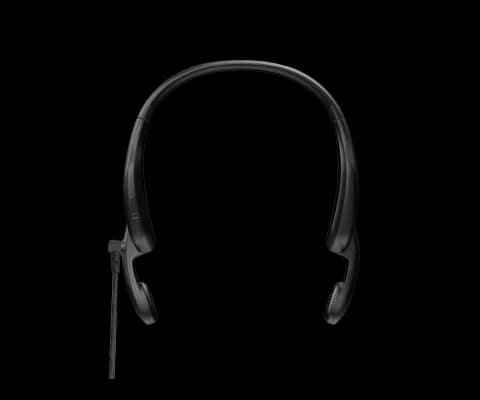
Twist HIFI
Superior Spatial Sound Experience

Twist XL
Maximum Comfort, Premium Quality, Complete Immersion

Need some help?
We can advise on the best possible solutions for your visitors. Speak to our experts today.
Museum headset FAQ
Which headset is best for a museum: open-ear, on-ear or over-ear?
Choose contactless Twist when hygiene and environmental awareness matter, Twist HIFI for richer on-ear spatial sound, and Twist XL for an over-ear fit with greater physical isolation. Edge is a compact single-ear option. The best choice depends on cleaning, comfort and the listening experience.
Can visitors use the headsets with hearing aids?
Offer an induction loop instead of asking a visitor to wear a headset over a hearing aid. The optional I-Loop sends sound to a compatible telecoil hearing aid and works with Look2Innovate audio-guide units. Confirm the hearing-aid setting, receiver and connector before rollout.
How are museum headsets kept hygienic?
Contactless Twist avoids direct ear contact, while the polycarbonate shells and the cushions on HIFI and XL models are made for routine cleaning. Look2Sanitise is an optional chemical-free UVC workflow for higher-volume operations. The venue should define a return and cleaning process for its selected equipment.
Are the headsets comfortable for long museum visits?
The range covers different fits and weights: Edge is 80 g, Twist is about 90 g and Twist HIFI is 128 g, while Twist XL uses a larger over-ear design. Flexible or adjustable headbands help fit different visitors; the right model depends on contact, isolation and comfort priorities.
Can a damaged headset cable be replaced?
Yes. Current Twist headsets use a detachable Kevlar-reinforced cable, so a worn cable can be replaced without discarding the complete headset. Edge, HIFI and XL also use serviceable reinforced cable designs; confirm the replacement cable for the exact model and generation.
Do museum headsets have their own volume controls?
Some quoted Twist and Twist HIFI configurations include headset volume controls and navigation buttons. Other setups control volume on the connected audio guide, tablet or tour receiver. Confirm the controls for the exact headset and player combination before ordering.
What sound quality can we expect from museum headsets?
Contactless Twist prioritizes clear audio and hygiene, Twist HIFI adds richer spatial sound, and Twist XL provides the strongest physical isolation. Edge is designed for clear single-ear speech while keeping the other ear open. A sample is recommended when sound character is a deciding factor.
Which audio guides, tablets and tour systems are the headsets compatible with?
The passive Look2Innovate headsets use a standard 3.5 mm connection and work with Look audio guides and tablets. They can also connect to tour-guide receivers with the correct output. Other devices may need an adapter or a compatibility check for their connector and volume level.
Can the microphone on a listener headset be used by the tour guide?
Twist HIFI can be supplied with a microphone, but the confirmed group-tour setup uses a dedicated Style TGT microphone connected to the guide transmitter. A listener headset microphone is not automatically the guide input, so the microphone and connector must be specified with the transmitter.
What is the difference between a passive headset and the Twister audio guide?
A passive headset needs a separate audio guide, tablet or tour receiver. Twister combines the playback electronics, storage, battery, wireless triggering and headphones in one hands-free device, so there is no separate player or cable for the visitor to carry.